Public Engagement

Public engagement is highly important for research in today’s society. Not only to legitimize research in the public eye, but to also improve and inform research. The MRC DTP actively promotes and supports engagement with the wider public, in particular with local communities in London. The DTP works closely with organisations such as the King’s Cultural Institute and the Science Gallery to provide opportunities for our students to develop such activities.

Public engagement can take many forms including podcasts, blogs, outreach activities and public displays. Our students’ work captures the imagination and intrigue of the public in a variety of ways; we are pleased to share some of their work below.
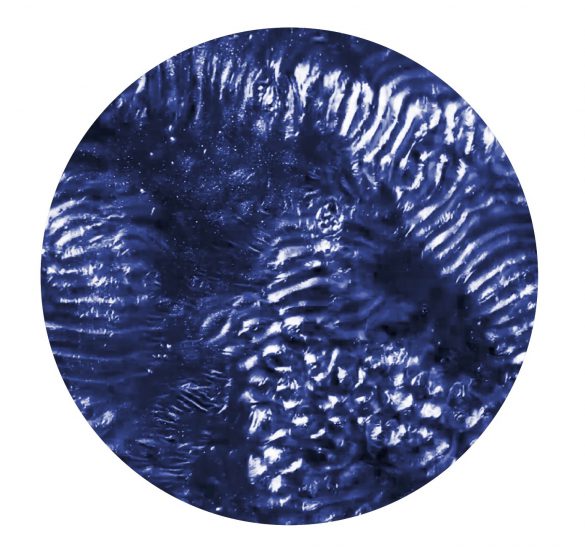
Phoebe Reynolds

I am delighted to receive the British Neuroscience Association (BNA) Public Engagement Award 2024 and the Early Career Researcher (ECR) King’s Engaged Researcher Award 2024 for my public engagement and outreach work I have done through my PhD. I am driven by a passion for sharing neuroscience in ways that are accessible, inclusive and creative.

With PhD students in my department, the Centre for Developmental Neurobiology (CDN), we created an educational pantomime about our research, The Brave Little Neuron. Here, we transformed our complex neurodevelopmental research into interactive and fun performances to teach the public how our brains develop and how we each are unique. I coordinated the team for two years to perform across the UK at schools, events, music festivals such as Green Man, as well as at New Scientist Live. We reached audiences ranging from schoolchildren to grandparents, many of whom had little exposure to neuroscience before. Seeing people engage with the research and hearing their questions and reflections on our work was really inspiring. The project has now passed on to the new group of PhD students, and I am thrilled to see it continue to grow.

I am also involved with the UK-wide science charity in2scienceUK, where it is clear to see how impactful mentorship and accessible opportunities can help break down barriers in science. As a trustee with the charity, I have played a role in the shaping and growth of the organisation. This has also involved opportunities to mentor undergraduate students as part of the in2research programme, and it is clear to see the impact of diversity strengthening the scientific community.

I enjoy finding creative ways to share science, including performing science themed stand-up comedy around the UK and with Science Showoff, which has challenged me to communicate ideas in an approachable but entertaining way. Public engagement is a great way to connect neuroscience with society, and receiving these awards celebrates not just my efforts, but the incredible teams and communities I have had the privilege of working with.

Madeleine Reid

I recently had the opportunity to participate in the Japan Society for the Promotion of Science Summer Programme, an 8-week initiative fostering collaboration between Japanese research groups and PhD students or early career researchers from around the world. I was drawn to apply, as I wanted to enhance my research while experiencing life in a different culture. The application process required significant preparation, including liaising with my host professor several months in advance to develop a detailed research plan.

My PhD at King’s College London focuses on metabolism, specifically the link between brown fat, white fat, and the liver in the context of fatty liver disease. During my time in Japan, I collaborated with the Sakai lab and focused on a specific protein central to their work, that is underexplored in fatty liver disease. Their expertise gave me valuable insights into my research, which I can now apply to my work back in London.

Living and working in Japan was equally rewarding on a personal level. Exploring Japan’s rich culture was of course an integral part of my time. I spent my weekends discovering Northern Japan’s spectacular countryside and spent a few weeks after the programme travelling around the Southern Japan with friends.

Overall, this experience truly solidified the importance of international collaboration in science, and I feel really lucky to have been selected to take part in this programme.

Yan Ge

Driven by a passion for educational equality, I joined the Baytree Centre as a volunteer to lead a weekly science club for girls in Years 4 to 6 from underrepresented backgrounds. Since April, I have been designing and delivering engaging, hands-on sessions every Tuesday evening, fostering a love for science.

In the first term, I introduced girls to brain anatomy and its functions through creative activities like drawing brain diagrams and constructing brain models with clay. These activities made complex concepts accessible and encouraged the girls to engage with science in a fun and interactive way. In the current term, I have expanded the curriculum to cover animals, plants, and the human body. Sessions include interactive discussions, hands-on experiments, and group activities, enabling the girls to recognize animal habitats, life cycles, skeletal systems, and plant structures and functions. Beyond teaching science, my primary focus is to help the girls develop character traits such as purpose, fairness, good judgment, resilience, and self-control. I encourage them to set personal goals for the club, solve problems collaboratively, cooperate with one another, and adhere to class rules.

Laura Odemwingie

As a 2023 In-Reach panel member at King’s College London, I had the opportunity to discuss my experience and offer advice on how to best navigate PhD programmes applications and the interview processes in the UK. This workshop was part of an undergraduate mentoring initiative that was set up to encourage students from under-represented backgrounds to apply for postgraduate research programmes. I am thankful to have been able to contribute by sharing my journey, and for this to have hopefully helped and supported other aspiring students from my community in pursuing a PhD.

Treasa Jiang

I am a PhD student based at St John’s Institute of Dermatology, King’s College London. Aside from my PhD work, I am also the social media lead for one of our studies called mySkin. mySkin is a UK-wide longitudinal cohort study that aims to identify determinants of inflammatory skin disease onset, progression and treatment outcomes over time. Participants can self-enrol through our online platform and submit self-reported data and photographs every three months for one year. As such, engagement and inclusion are key to the success of the study, both to ensure participant retention over time and that the study population is representative of those affected by skin diseases.

I am responsible for maintaining our social media channels (@myskinstudy on Instagram and X), through which we advertise our study, publicise milestones reached, showcase participant feedback and disseminate emerging findings. My role includes designing posts on Canva, scheduling uploads and tracking engagement. Social media strategy is discussed at our monthly communications team meetings, which is attended by multiple stakeholders including researchers, patient representatives, clinicians, project managers and partner patient organisations (e.g. The Psoriasis Association). Thus far we have recruited over 800 participants and reached over 1000 followers on Instagram.

Results from our study have been presented at national and international conferences, most recently at the 53rd European Society for Dermatological Research meeting in Lisbon. These experiences have fostered a deep passion for public engagement in me, as I have witnessed the genuine interest people affected by skin diseases have in research and their eagerness to contribute. The potential impact of these activities are far reaching across the UK and internationally, and go beyond the affected individuals, extending to their friends and family, patient and professional organisations, industry, policy makers and more. This inspires me to continue bridging the gap between the academic world and the wider community.

Sneha Chotaliya

Sneha Chotaliya, organised and led a series of advanced study seminars for secondary school students from low socio-economic backgrounds during the spring term of 2023. Through this initiative, she aimed to shift students’ perceptions of what it takes to secure a place at a prestigious Russell Group university and to demonstrate their potential to succeed in academically rigorous programs. The seminars included sample university lectures and hands-on assignments, offering students the opportunity to experience university-level learning. In addition, Sneha taught them how to critically evaluate and appraise academic literature, honing their ability to assess the reliability and quality of scientific evidence.

Jacob Knyspel

In June 2024, I gave a lecture at St Michael’s Catholic College titled “From DNA to depression: Exploring the role of genetics in mental health”. In this lecture I discussed my current research in psychiatric genetics to an audience of approximately 40-50 secondary school students. This was a wonderful opportunity to share my work with what turned out to be a very captive audience. I was pleasantly surprised with how many students volunteered their time to attend the lecture and how engaged they all were, asking questions and engaging in discussion with one another. Throughout the lecture, many students discovered that they disagreed with each other when it came to some of the more controversial issues in my field, something which I think sparked a lot of interest. Overall, I think the students really appreciated the opportunity to learn about something beyond the school curriculum (I know I would have done when I was in school). Schools like St Michael’s are always looking for guest speakers to give lectures like mine, and this is something I would definitely recommend to other PhD students. To anyone interested in disseminating their research to members of the public, make sure to consider school students, who I’ve learned can be among the most captive and thoughtful of audiences.

Bridget King

In addition to my PhD studies, I have the privilege of organising and contributing to the teaching at the KCL Pre-University Summer Schools in Psychology and Neuroscience. These residential summer schools run for one week at a time throughout July.

The programmes are designed for students aged 16-18, many of whom are considering applying to university. The aim of the summer schools is to offer them a taste of university life by incorporating a variety of teaching methods, including lectures, seminars, practicals, and visits to research institutions and museums. The majority of the cohorts are made up of international students, giving them a unique opportunity to experience both studying at a leading UK university and immersing themselves in a new culture.

I really enjoy the process of organising these courses as it not only highlights the exceptional learning experience we offer at King’s, but also provides a platform for early career researchers to showcase their work. Each year, I am amazed by the depth of knowledge the students bring and how quickly they absorb the course material. This experience continually inspires me to improve as a university teacher!

Chloe Carrick

Alongside my PhD work, I’ve had the opportunity to collaborate on an episode of The Science or Fiction Podcast. This podcast, produced and hosted by Dr. Kathryn Bates (Research Fellow in the Department of Psychology, IoPPN), interviews researchers to separate the science from the fiction in news headlines. This podcast is produced with young people (aged 16-24) and aims to provide them with the tools to critically evaluate research evidence and its accompanying media coverage. I am passionate about science communication and increasing the accessibility of research findings to young people, so I found this whole experience really inspiring.

I co-produced and hosted an episode for the podcast entitled: “What happens to the brain during pregnancy?”. We interviewed Dr. Laura Pritschet (University of Pennsylvania) about a Nature Neuroscience article of which she was lead author, which investigated structural brain changes over the course of a human pregnancy. Given that my own PhD research focuses on structural brain changes during adolescence, I thoroughly enjoyed the process of interviewing Laura about her perspectives on the findings of the study, and its coverage in the media. This experience also gave me valuable insight into the process of producing a podcast episode for young people and explaining complex research findings in an accessible format. You can listen to our podcast episode here, or on your favourite podcast platform.

Helena Moretti

I recently led workshops to teach year 12 and 13 students about cell culture methods as part of the Diabetes Research Group’s work experience week. This programme gives students from schools in and around London the chance to try their hand at different research techniques, and present their findings at the end. Taking part in these workshops was a great opportunity to share my knowledge with students, and give some insight to support them before making their post-secondary choices.

I found the experience really rewarding – having started my PhD with a non-biological background, I am very familiar with how daunting it can be to step into a tissue culture room for the first time! It was great to see the students become more comfortable and confident as the sessions progressed, and to tell them a bit about what life as a PhD student is like.

The sessions were great fun, and the students were excited about the topic. Explaining that I’m still a student myself encouraged them to ask their questions in a judgement-free zone, which made for great engagement and discussion. As someone who wants to follow an academic career path, the teaching experience was invaluable and improved my confidence in going for GTA roles at a later stage of my PhD.

I would really recommend getting involved in outreach opportunities with school students. You get excellent experience and the chance to share your knowledge and expertise, while also giving the students a fun and engaging session that supports their academic and career development.

Public Engagement from past cohorts

Joe Barnby

Joe is passionate about the combination of science and art to communicate complex human experiences that are often the subject of experiments. He co-founded a public engagement venture Senscapes (www.senscapes.com) which turn brainwaves from neuroscience experiments into music and art. This most recently resulted in a collaboration with the Psychedelic Research Group at Imperial. Senscapes created an immersive experience that used the brainwaves of those on psilocybin to create an installation to bring the psychedelic journey to the public without having to take any drugs. They raised over £300 for Mind, and managed to host a panel of participants from the trial and scientists on the trail to talk about their experiences. They’ve been funded by bodies such as the MRC, Wellcome Trust, Horizon 2020, and Science Gallery. Joe has also won a KCL Cultural Award for his blend of art and science in a painting on psychosis, frequently appears on radio and podcasts talking about mental health, and writes for his own blog (joebarnby.com) and The Mental Elf (https://www.nationalelfservice.net/mental-health/).
Natali Bozhilova

Natali Bozhilova

I am particularly passionate about equal opportunities in education. Earlier this year I was offered the opportunity to work as a PhD tutor as part of Realising Opportunities. Realising Opportunities is an organisation which facilitates access to higher education for school students from disadvantaged backgrounds. My area of expertise was Psychology and Neuroscience. I was mainly involved in organising two tutorials, which aimed  to enhance the students’ academic skills. As part of the tutorials, I facilitated the choice of a title for their assignment and provided feedback on their first draft.  Consequently, my student produced a piece of original coursework, which I also marked. Successful completion of the coursework supports an application to research-based universities further.

Laura Constable

Authentic Biology Symposium

I took part in a collaboration between the Wellcome Trust and the Institute for Research in Schools (IRIS), working to encourage A-level students to take part in research projects in conjunction with local universities. Students presented their work at an Authentic Biology Symposium day at the Wellcome Trust (21 November 2017). I was part of a panel of Bioscience PhD students, talking about the research we’re currently doing as part of our PhD’s (followed by short Q&A from students) and also a Q&A session about life as a PhD student.

International Clinical Trials Day

I also took part in International Clinical Trials Day (22 May 2018), hosted by the public engagement team at the BRC. Held in the atrium of Guy’s Hospital, with visual aids (e.g. posters, information leaflets, research postcards) we discussed our ongoing research in the lab with the general public.

In2science UK

In2science UK is an organization that aims to support young people from low-income backgrounds to pursue STEM subjects at university-level. Recently we hosted an In2Science UK  A-level student in the lab for two weeks (20 July – 3 August 2018), where they shadowed and took part in experiments for work ongoing in the lab.

Hannah Jones

I was involved in organising a project with The Institute for Research Into Schools (IRIS). This organisation works to get students interested in science by showing them what scientific research can be like outside of a school text book. Myself and some fellow MRC DTP students went and gave short talks about our research projects at a research symposium day for around 150 6 form students, held at the Wellcome Trust building on 21 November last year. We also then held a panel discussion where the students could ask questions about our work, or what it is like to be a PhD student. The students then presented the research projects that they had been working on as part of the programme.

Hannah Jones

Curie Kim

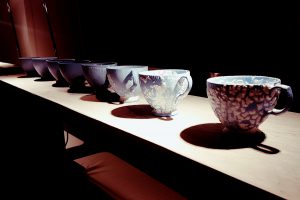
In February 2018, I took part in a project with a philosophy PhD student Benjamin Dalton from the French department exploring the relationship between art and neuroscience in the theme of plasticity. We worked with ceramicist Amanda Doidge to draw inspiration from each other from the lab and Denmark Hill and at her ceramics. The resulting artwork was displayed at an exhibition showcasing the amazing ceramics from Amanda inspired from many conversations about plasticity from a science and philosophy point of view. The evening involved a panel discussion with the scientists involved and Amanda in which thought-provoking discussions were had with the public.

“In the same month, I created a science communication podcast Lay It Out. With a team of 3 hosts we attempt to explain research papers to guests from a non-scientific background. Thus far, we have published 17 episodes receiving thousands of downloads from listeners all over the world.

 In July 2018, I received funding from the King’s Doctoral College for an “Upgrade Your Brain” stall at Lambeth Country Show. It was a huge success with lots of games for all ages including a build your own neuron station, a build a brain game and a cognitive task. The Lambeth Country Show attracts thousands of visitors every year and the team were non-stop busy educating the public in adult hippocampal neurogenesis and treating them to “brain boosting” snack packs of dark chocolate, almonds and dried blueberries.

Alexandra Lautarescu

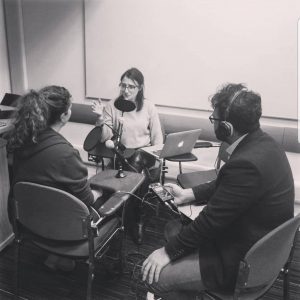
Earlier this year a group of MRC DTP/HSDTC students attended a Podcast training session and at the end of the day, we had recorded the first episode of Postdocalypse, a podcast “by postgrad students about all things postgrad”. Our episodes so far include discussions about various healthcare research topics (artificial intelligence, neurodevelopment, nutrition, hypnosis, cancer cell therapies, delusions, and psychedelic research), as well as topics that are of relevance to postgraduate life (the portrayal of science in the media, mental health, ethics, public engagement, women in science, and entrepreneurship). On each episode, we interview a new guest about their research and include panel discussions with other PhD students. We engage with the public and our audience via our twitter @Postdocalypse18, where we take questions and suggestions for future episodes, and where our guests get a chance to “take-over” our account and talk about their work in a bit more detail. You can find us on soundcloud https://soundcloud.com/kings-hsdtc or on most podcast platforms (i.e. iTunes, Podbean etc).

Kristi Sawyer

I am particularly passionate about public engagement, particularly with young people, as I enjoy seeing students becoming so passionate about science. For this reason, I have undertaken a number of activities.

The first of these was ‘I’m a Scientist – Get Me Out of Here!’ in November 2017. This is an online event where school students can ask scientists questions about their research, and about science as a career path. This is either by long-answer Q&A or fast-paced online chat sessions. School students vote for their favourite scientists, and scientists are eliminated until the winner remains. I participated in the ‘Stress Zone’ which is most relevant to my research, and was pleased to be placed 3rd.

With a similar idea, I also participated in ‘Shadow a Scientist’ in August 2018, a scheme where A-level students are invited to King’s to ask students questions about science degrees. I then helped in a CV clinic, to give 1-to-1 feedback to students about the layout and content of their CVs.

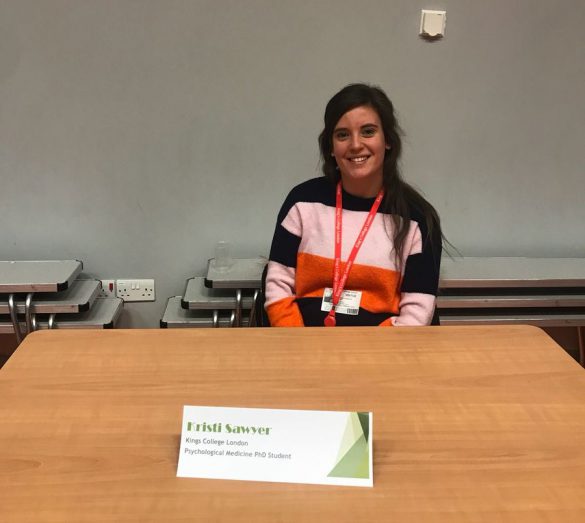
In addition, I was pleased to host two GCSE-level students in my lab for two weeks each, to show them both the laboratory-based and clinical work that is conducted in our group. They also had the opportunity to practice their presentation skills in front of some members of the lab. Finally, I have participated in other, smaller events such as a careers fair in a local secondary school (as shown in the pictures below).

Through all these activities, I was able to give school students, of a variety of ages, an insight into what a career in science can be like. It was very rewarding to see how excited they were, and to observe their passion for science growing. I would really recommend public engagement activities to all scientific researchers, as it helps to re-invigorate your own passion in your work, as you see others so thrilled by it.

Alice Vickers

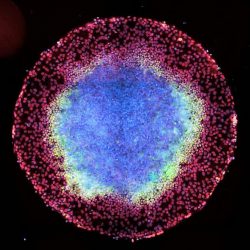
This year I was awarded funding from the King’s Public Engagement Small Grant Scheme alongside Jessica Sells, the Public Engagement Officer in my department, the Centre for Stem Cells and Regenerative Medicine (CSCRM). Together we have organised a series of stem cell embroidery workshops called “Stich and Stem”. Images of stem cells and stem cell structures which have been generated from my PhD research and by other researchers in my department are used as embroidery templates and attendees are taught about stem cells while learning a transferrable skill. This concept is based upon the 1940s “stitch ‘n’ bitch” meetings where individuals would gather together over knitting or other needlecraft and discuss ideas and issues. We’ve collaborated with the fashion brand Wool and The Gang who deliver a tutorial of how to embroider, then whilst the attendees work on their embroidery, there is an open discussion about stem cells and stem cell research. CSCRM researchers present at the workshop can discuss their research and its direction to hear the opinion and thoughts of attendees and, where possible, include them in the planning of future projects. The attendees are also given a general introduction to stem cells and stem cell research, as well as a tour of the CSCRM to view the research laboratories and learn about the work that we carry out.

So far, these workshops have been held at Guy’s Hospital Cancer Survivor’s Day, the British Research Council Summer School and internally at the CSCRM, reaching people from a broad range of backgrounds and ages.

Above is an example of an image from my research and the embroidery template for it.

Alice Vickers

Zsofia Szlamka

Research, for some, is about results and publications. To me, research is just as well about a story to tell. The Travelling Psychologist presents stories and encounters behind the scenes of psychological research and PhD life, through the eyes of an early career researcher. In my scientific work, I am interested in autism spectrum disorder and neurodevelopmental disorders from a global health and international development perspective. This blogs presents  learning experiences from my fieldwork, considers cultural differences, moral and ethical questions underlying research.

Zsofia Szlamka

Alastair Kirby

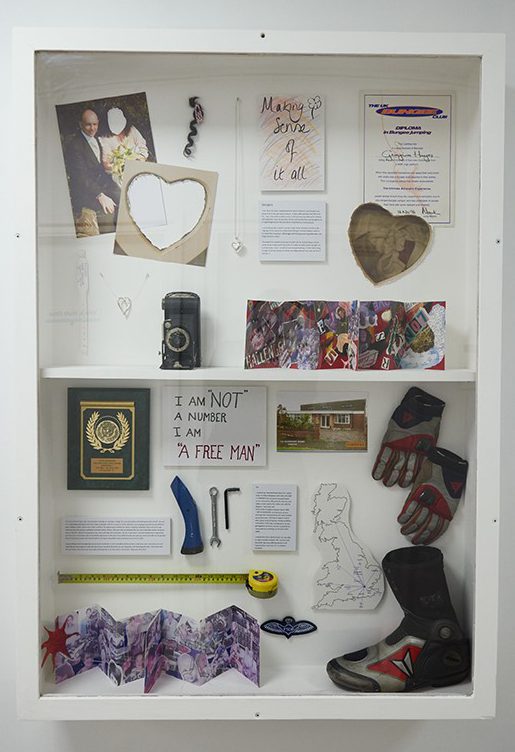
In 2018, I took part in an exciting collaboration involving Artists, Scientists and people affected by frontal lobe brain damage. The project, Losing One’s Sense of Self explored how frontal lobe injury affects peoples’ personal identity and social interactions. The Artists, Iris Musel and Isla Millar, teamed up with the Finnerty Lab, Dr Gerald Finnerty, Dr Sophie Bennet and me (Alastair Kirby), to run a series of workshops for participants with a frontal lobe injury. In these workshops, the participants used art to help them communicate their loss of sense of self. The art work produced by the participants and the Artists response was showcased in the Arts in Mind festival in mid 2018, and is currently being exhibited as part of a residency at the London Science Gallery.

Alastair Kirby